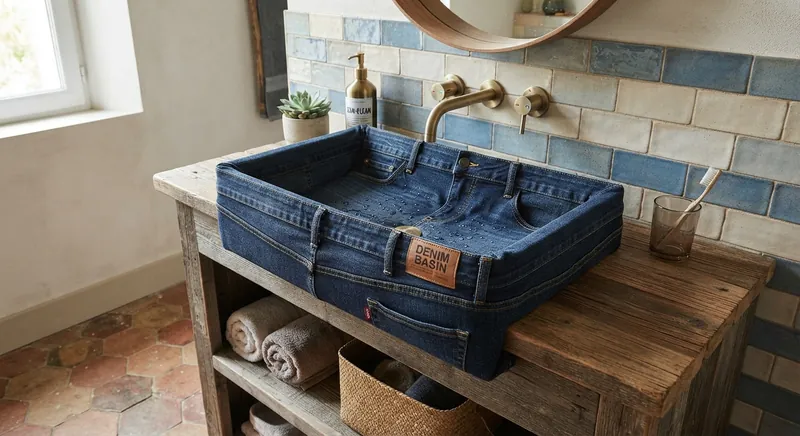
The Jink
$1,960
Vessel basin · 4 pairs · Sealed inner shell
Complimentary white-glove delivery on orders above $2,000 · Every seam inspected twice
Studio photography for this piece is in production.
Bathing
The objection is obvious. We shared it, at length, for twenty-six months.
$2,480
Ships with three complete cover sets.
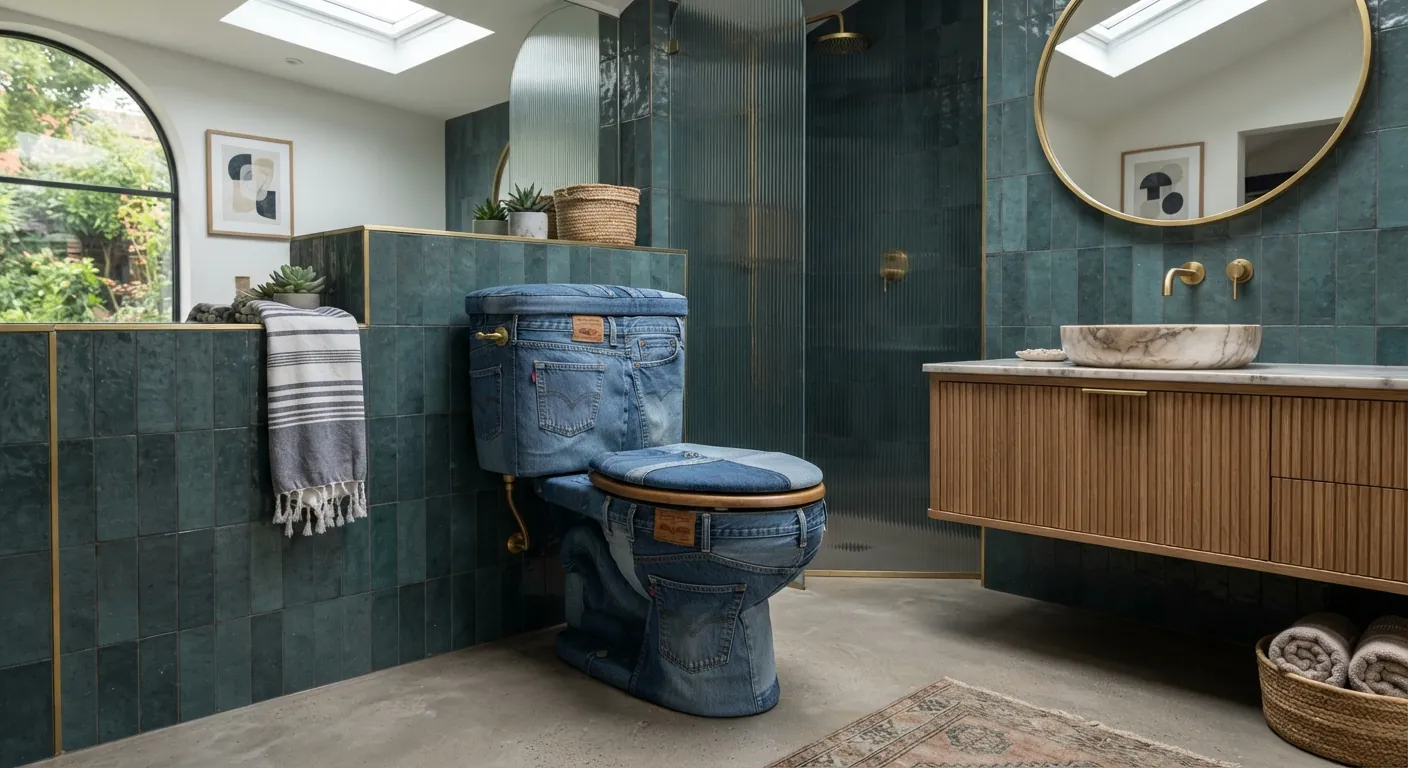
A standard vitreous china two-piece, with removable denim covers over the cistern and pedestal, and a solid oak seat. No fabric touches skin. Every denim surface comes off without tools and goes into a domestic machine at 60 degrees. Three complete sets ship with the product so that one is always clean, one is in use, and one is in the wash.
Development
Almost every version of this product we sketched was one we would not have had in our own houses, and we said so out loud in a lot of meetings. The design only became defensible when we inverted it: instead of asking how to make denim survive a bathroom, we asked what would have to be true for the fabric to be irrelevant to hygiene. The answer was that it must never contact skin, must come off without tools, and must be washed as often as a towel. Three sets, an oak seat, and ninety seconds. Everything else followed.
The seat was the first decision and the one that made the rest possible. An upholstered seat on a WC is indefensible and no amount of engineering rescues it, so the Joilet seat is solid oak, oiled, replaceable, and entirely conventional. Once that was fixed, every remaining denim surface became a decorative cover on a vertical face — the same hygienic category as a bath mat or a towel, and treated with the same discipline.
The covers are cut so that no seam sits where splash lands, and the lower hem stops thirty millimetres clear of the floor so it never sits in whatever is on the floor. These sound like small decisions. They are the whole product. A Joilet is not a triumph of upholstery; it is a triumph of deciding what not to upholster.
Ownership
Questions we are asked
Yes, and deliberately so. No fabric contacts skin — the seat is solid oak. Every denim surface is a removable cover on a vertical face, held clear of the floor, and washed at 60°C like a towel. Three sets ship as standard so that rotation is the default behaviour rather than an intention.
We have asked ourselves, out loud, for twenty-six months. The answer our owners give is consistent: the bathroom was the last room where the material stopped, and the inconsistency bothered them more than the solution does.
Under ninety seconds for both covers, without tools. If it took longer, nobody would rotate them, and a cover that is never washed is the entire failure mode of this product.
Yes. Take the covers off and it is an ordinary close-coupled WC with ordinary fittings. No plumber needs to know anything about us to service it.
There is a pause of about two seconds and then, in our experience, one of two questions. We have prepared answers to both and they are the first and second entries above.
Pairs with
$1,960
Vessel basin · 4 pairs · Sealed inner shell
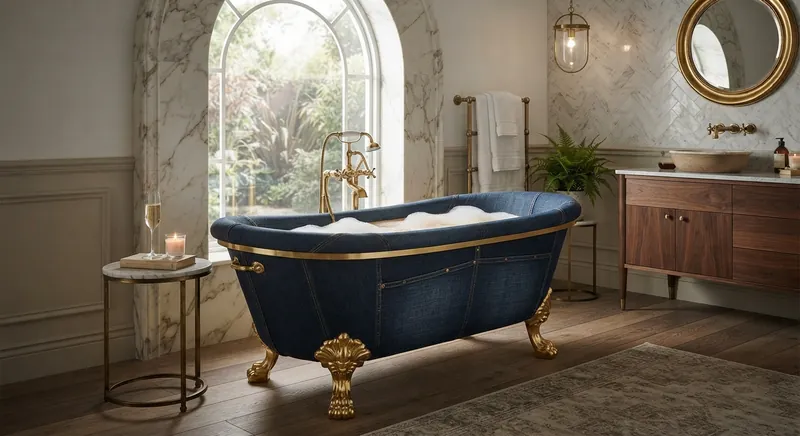
$8,700
Freestanding roll-top · Sealed composite core · Cast brass feet
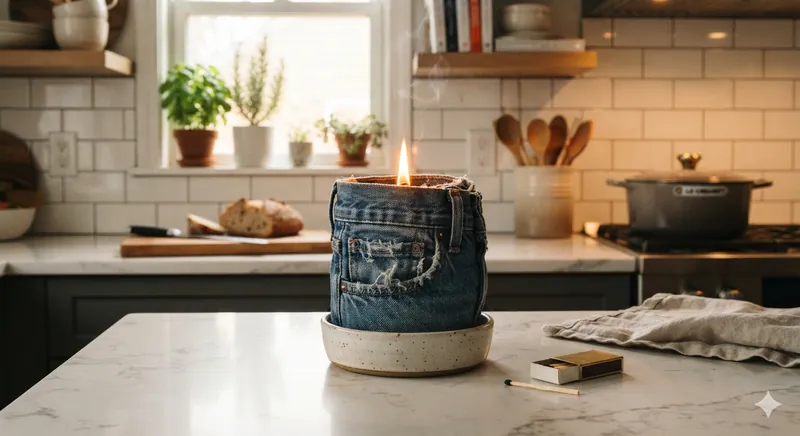
$54
Poured candle · 60 hours · Sealed glass insert