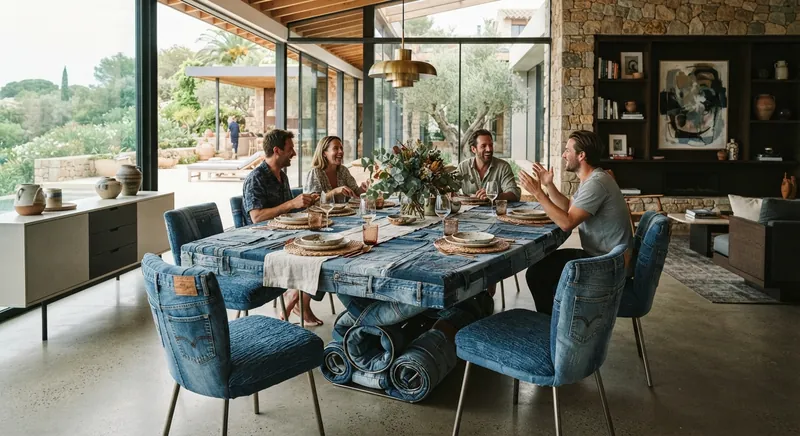
The Jairs
$1,140 each
Dining chair · 7 pairs · Bias-cut over jute stabiliser
Complimentary white-glove delivery on orders above $2,000 · Every seam inspected twice
Studio photography for this piece is in production.
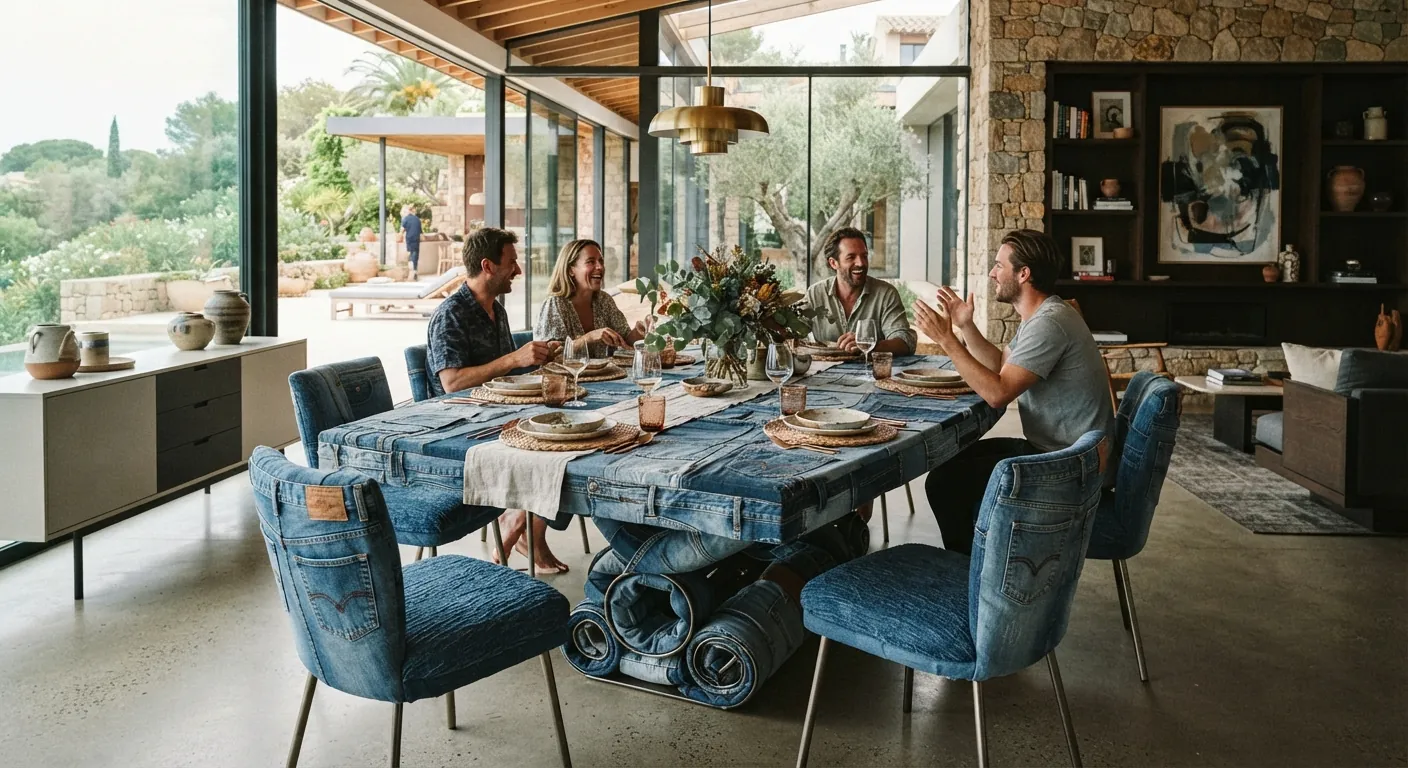
Dining
Twenty-three months, and a stain we have never removed.
$6,900
Seats eight. Jairs sold separately.
The hardest surface we have ever had to make, because a dining table is asked to be both a textile and a plate. The Jinner top is a compressed denim laminate under nine hand-poured coats of matte sealant, cured for twenty-one days. The pedestal is rolled denim — actual rolls, banded and compressed, load-bearing by geometry rather than by anything we added.
Development
We tried resin first. Resin works perfectly and makes the table look like a photograph of denim trapped in plastic, which is to say we had accidentally built a novelty. We tried hardwax oil, which looked superb and surrendered to red wine in under a minute. Nine coats of hand-poured matte was the fourteenth formulation. Panel 14 sits in our lobby with a 2019 Barolo stain we have never been able to lift, and we show it to every customer before they sign anything.
The base of the Jinner is not a frame with fabric on it. It is denim rolled into cylinders, banded under nine tonnes of press, and stood on end. Rolled cotton under axial compression is genuinely strong — the same principle that lets a tightly wound paper tube take a considerable load — and it means the only steel in the base is a levelling plate at the floor.
It also means the pedestal is the one part of the table that is unsealed and will fade. We were asked repeatedly during development to seal it to match the top. We declined, because a table where every surface is finished identically is a table that has stopped being made of clothing, and at that point the customer would be better served by a very good piece of joinery from somebody else.
Ownership
Questions we are asked
Wiped inside a minute, nothing. Left overnight, you will have a mark for the life of the table. Test panel 14 is in our lobby with a 2019 Barolo on it precisely so that this conversation happens before the sale rather than after.
No. Above roughly 60°C the sealant softens and takes an impression of whatever is on it. Eight trivets ship with every table for exactly this reason and we would ask you to actually use them.
It is denim. Thirty-eight pairs are laid up, compressed to 32 mm, and sealed. You can read the seams and the pocket bags through the finish, which is the entire argument for the fifteen-week lead time.
Cutting the laminate opens the compressed edge, and a sealed edge is the only thing keeping moisture out of the core. A table that can be extended is a table that can be ruined at the seam.
Constantly, and without being invited to. It is the single most touched object we make, which is flattering and is also the reason the top is sealed and the pedestal is not.
Pairs with
$1,140 each
Dining chair · 7 pairs · Bias-cut over jute stabiliser
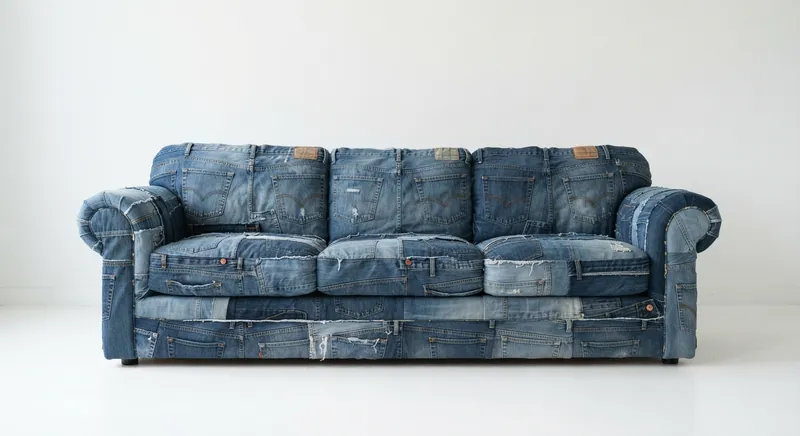
$4,280
Three-seat sofa · 41 pairs · Kiln-dried ash frame
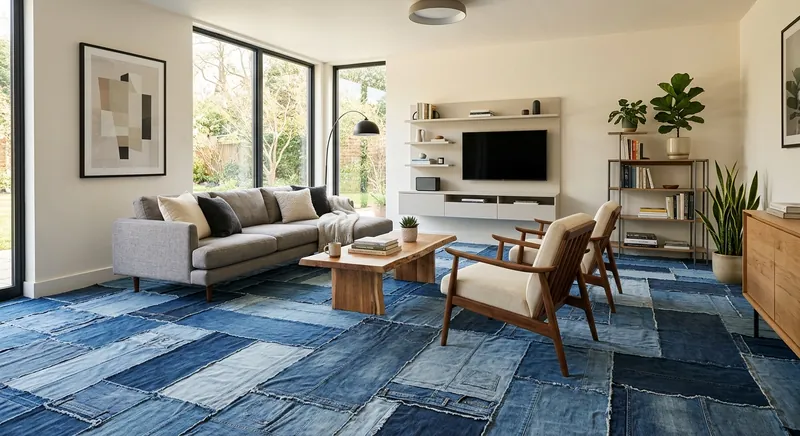
$92 / sq. ft.
Wall-to-wall flooring · Hand-laid tiles · Jute backing