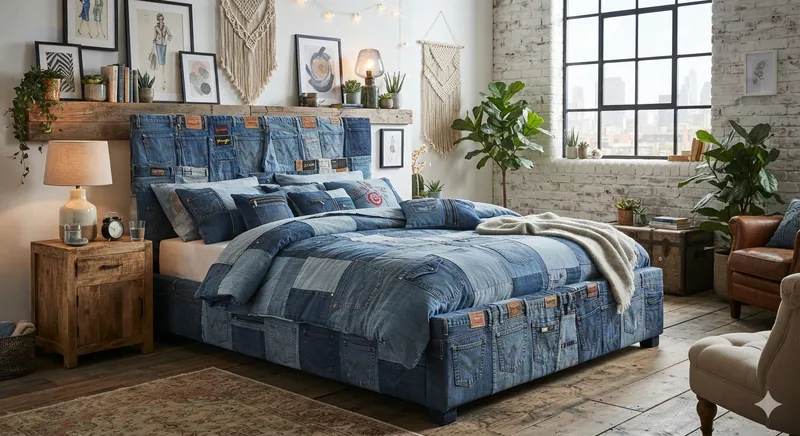
The Jed
$5,400
Upholstered bed · 52 pairs · Pieced headboard
Complimentary white-glove delivery on orders above $2,000 · Every seam inspected twice

Studio photography for this piece is in production.
Sleeping
Our smallest object and the one that took the most engineering per ounce.
$180 / pair
Sold in pairs. Inserts included.
A denim cushion is a simple thing to make and a genuinely difficult thing to make well, because a cushion is the only object in the house that spends its life being pressed against other objects. Every rivet, button, and stud on a Jillow has been replaced with a shankless brass dummy. There is no hard metal on the back face at all.
Development
The first Jillows kept their original hardware, which looked correct and was quietly ruinous. A rivet has a shank, the shank sits proud on the reverse of the fabric, and a cushion with a proud shank is a small machine for scratching the arm of a sofa. We found this out on a Jouch, in our own showroom, over about five weeks. Every Jillow now has its hardware drilled out and replaced with a brass shell on a felt post that does nothing except look like a rivet.
Jillows come back more than anything else in the collection, at about one pair in fourteen, and the reason is almost always the same: they are heavier and stiffer than a customer expects a cushion to be. Three pairs of jeans go into a single 22-inch Jillow. It does not behave like a linen cushion and it never will.
We have considered making a lighter version and have decided against it twice. A thin denim cushion creases into a shape it never leaves, and within a season it looks like laundry. The weight is what keeps the face flat. We now say all of this on the order form, which has reduced returns to one in twenty-two and has cost us a number of sales we are content to have lost.
Ownership
Questions we are asked
No. Every piece of hardware on a Jillow is a shankless dummy on a felt post, specifically because the original rivets did scratch a sofa — ours, in our own showroom, which is how we found out.
Three pairs of jeans per cushion. A lighter Jillow creases permanently and starts to look like laundry within a season, so the weight is doing real work. This is the single most common reason for a return and we would rather you knew now.
No. They are graded and matched in pairs from the same run, and a single Jillow beside a cushion from a different batch reads as a mistake rather than a choice.
The cambric insert shell is. The denim cover is not, and washing it will cost you the wash grade you chose. Spot-clean, or send it to us.
Fewer than you are planning to. Three Jillows on a Jouch reads as considered; five reads as a shop window. We have never once advised a customer to buy more of them, which our accountant has raised.
Pairs with
$5,400
Upholstered bed · 52 pairs · Pieced headboard
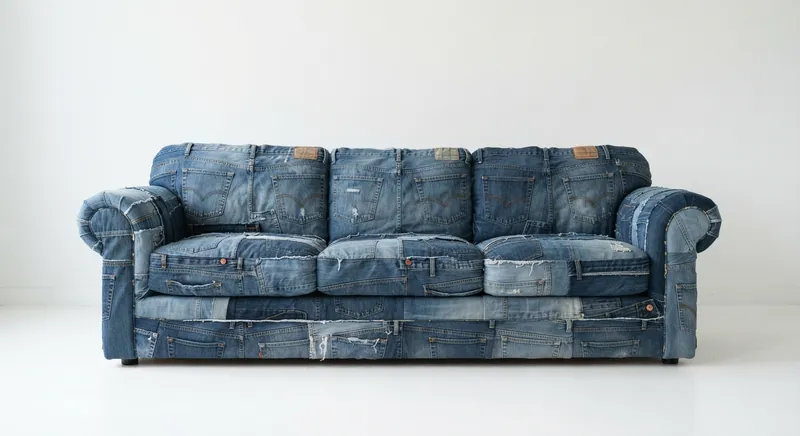
$4,280
Three-seat sofa · 41 pairs · Kiln-dried ash frame
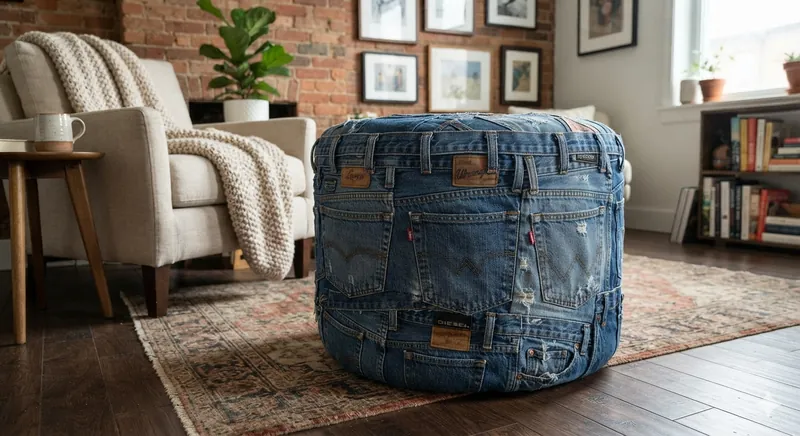
$980
Round pouf · 14 pairs · Waistbands intact